

High-Quality Copper tripeptide/GHK-CU CAS:89030-95-5 Manufacturers, Quotes (Japan Grade)
Applications: Extracellular matrix synthesis, post-laser repair in Tokyo aesthetic clinics.
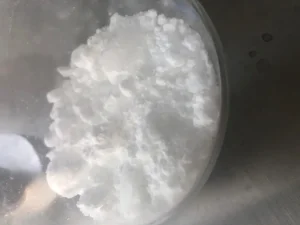
Direct from our commercial synthesis reactor lines: validated peptide sequences matching Japanese pharmacopoeia and quasi-drug specifications with rigorous HPLC purity documentation.
Japan represents one of the world's most sophisticated and quality-sensitive cosmetics ecosystems. Navigating the regulatory boundary between conventional cosmetics and Quasi-Drugs (Yakuyo) requires exceptional chemical consistency.
Under the Ministry of Health, Labour and Welfare (MHLW) and the Pharmaceuticals and Medical Devices Agency (PMDA), Japanese cosmetic formulators are increasingly registering peptide-infused active serums under the Yakuyo (Quasi-Drug) classification. This requires suppliers to provide exhaustive trace-metal profiling, residual solvent assays via GC-Headspace, and batch-to-batch sequence purity exceeding 99.0%.
With over 29% of Japan's population aged 65 or older, Japanese consumer demand has decisively pivoted from surface hydration to profound biological cellular longevity. Peptides that stimulate Type I and Type III collagen, fibronectin, and elastin—such as GHK-Cu, palmitoyl oligopeptides, and matrix-signaling messengers—have become core building blocks for brands based in Tokyo, Osaka, and Kobe.
The rapid expansion of non-invasive dermatological clinics across Tokyo’s premier beauty hubs has fueled demand for clinical-grade carrier peptides and neurotransmitter-inhibiting bio-peptides. Japanese dermatologists require sterile, pyrogen-controlled raw materials for bespoke mesotherapy cocktails, skin-needling adjuncts, and intense post-photorejuvenation barrier restoration formulas.
Estimated annual active peptide raw material consumption across domestic J-Beauty labs by 2026.
Thinheal standard analytical benchmark for cosmetic raw active ingredients exported to Japan.
Near-total acetate ion substitution ensuring zero transdermal irritation for sensitive Asian skin.
Lyophilized vacuum preservation under controlled temperature directly from our Hangzhou synthesis base.
By combining raw material upstream integration, solid-phase peptide synthesis (SPPS) automation, and advanced continuous purification chromatography, Chinese peptide manufacturers provide distinct commercial and quality advantages.
Unlike Western boutique labs that procure protected amino acid derivatives with hefty markups, our Hangzhou facility leverages vertically integrated precursor synthesis. We manufacture our own Fmoc-protected amino acids, coupling reagents (HBTU, HATU, PyBOP), and specialty solid supports (CTC resin, Wang resin), insulating Japanese buyers from raw-material shortages and delivering 30% to 50% unit cost efficiency.
Equipped with 500L to 3000L solid-phase reaction vessels and industrial microwave-assisted peptide synthesizers, our multi-ton chemical synthesis platform ensures uniform step-wise coupling yields exceeding 99.5%. This dramatic minimization of deletion sequences (n-1 and n-2 impurities) enables effortless batch crystallization and purification of challenging cosmetic sequences like GHK-Cu, Acetyl Hexapeptide-8, and Palmitoyl Pentapeptide-4.
Equipped with multi-stage preparative high-performance liquid chromatography columns (Prep-HPLC up to 300mm diameter) and cleanroom industrial freeze dryers, we achieve crystalline, free-flowing lyophilized cakes with uniform particle distribution. This translates to rapid reconstitution in aqueous Japanese cosmetic essences, transparent serums, and rich emulsion bases without clouding or precipitation.
Standard industrial peptide cleavage employs trifluoroacetic acid (TFA). However, residual TFA salts are strictly monitored by Japanese regulatory assessors due to potential dermal sensitization. At Thinheal, our state-of-the-art ion-exchange chromatography replaces TFA with physiological acetate or hydrochloride counter-ions, reducing residual fluorine to undetectable levels and ensuring maximum dermatological compatibility.
From Kyoto minimalist skin barriers to Tokyo high-tech anti-glycation creams, bio-active peptides are engineered into diverse cosmetic architectures.
Japanese consumers place extreme value on the stratum corneum barrier integrity (Hada-Arashi defense). Sourcing teams combine copper tripeptide-1 with palmitoylated carrier peptides and human-type ceramides (NP, AP, EOP) to stimulate epidermal involucrin and loricrin, mitigating transepidermal water loss (TEWL) during severe winter climates.
In Osaka and Yokohama formulation laboratories, peptides targeting advanced glycation end-products (AGEs) and matrix metalloproteinases (MMP-1, MMP-3) are formulated alongside fermented galactomyces filtrates and green tea polyphenols to counter photo-induced dermal matrix collapse.
Japan boasts the Asia-Pacific region's most active clinical hair preservation sector. GHK-Cu and oligopeptide hair-growth factors are synthesized as water-soluble powders for micro-capillary scalp ampoules, stimulating dermal papilla cell proliferation and countering dihydrotestosterone (DHT) induced miniaturization.
Indicative commercial export benchmarks for Japanese cosmetic brands, OEM/ODM contract fillers, and aesthetic medical suppliers. Tiered pricing varies based on purity thresholds (HPLC ≥98% vs ≥99%), counter-ion specification (Acetate vs TFA), and order quantity.
| Peptide / Active Molecule | CAS Number | Standard Purity (HPLC) | Counter-Ion Type | Indicative Price (100g - 1kg) | Commercial Tier (≥10kg) | Primary J-Beauty Application |
|---|---|---|---|---|---|---|
| Copper Tripeptide (GHK-Cu) | 89030-95-5 | ≥99.0% (Ultrapure Blue) | Acetate / Free base | $140 - $220 / 100g | Volume Pricing on Request | Collagen induction, skin barrier repair serums |
| Acetyl Hexapeptide-8 (Argireline) | 616204-22-9 | ≥98.5% | Acetate | $95 - $160 / 100g | Special Bulk Contract | Botox-mimetic wrinkle relaxing emulsions |
| Palmitoyl Pentapeptide-4 (Matrixyl) | 214047-00-4 | ≥98.0% | Acetate / Lipophilic | $180 - $280 / 100g | Direct Plant Quote | Dermal fibroblast stimulation, night elixirs |
| Palmitoyl Tripeptide-1 | 147732-56-7 | ≥98.0% | Acetate | $160 - $240 / 100g | Tier 1 Partner Rate | Lip plumping, extracellular matrix repair |
| Nonapeptide-1 (Melanostat) | 158563-45-2 | ≥98.5% | Acetate | $210 - $320 / 100g | Competitive Scale | MHLW-compliant brightening & hyperpigmentation |
| Custom Tesamorelin Analog | Synthetic | ≥98.5% | Acetate Salt | Inquiry Based | CDMO Contract | Visceral fat reduction & body sculpting R&D |
| Thymosin Alpha 1 (Clinical Grade) | 62304-98-7 | ≥99.0% | Acetate Salt | Inquiry Based | GMP Campaign | Immune dermatology & cellular rejuvenation |
*Disclaimer: Above quotations reflect general market guidance for research and commercial cosmetic manufacturing batches (USD equivalent, FOB Shanghai or CIF Narita/Kansai Airport). Final pricing is customized according to regulatory paperwork (CoA, DMF filing support, TSE/BSE-free certification, and allergen declarations).
Japanese regulatory directors and quality control managers follow exacting supplier verification methodologies before greenlighting an overseas active cosmetic or pharmaceutical peptide supplier.
A standalone percentage claim is insufficient for Japanese regulatory audits. Auditors scrutinize high-resolution RP-HPLC chromatograms, examining peak symmetry, retention time stability, and the integration of minor deletion peaks (such as des-Gly or truncated sequences). Thinheal provides complete raw chromatographic data and LC-MS molecular weight confirmation for every release batch.
Experienced formulators recognize that a peptide sample with 99% HPLC purity may only possess 75% to 85% net peptide content due to bound hydration water and counter-ion mass. We execute quantitative Amino Acid Analysis (AAA) and Karl Fischer titration to establish exact net peptide values, enabling precise dosing calculations in Japanese formulation labs.
In strict compliance with the Japanese Standards for Cosmetics (MHLW Notification No. 331), our peptide active powders undergo Inductively Coupled Plasma Mass Spectrometry (ICP-MS) testing to confirm heavy metal levels (Lead ≤ 10 ppm, Arsenic ≤ 2 ppm, Mercury ≤ 1 ppm, Cadmium ≤ 1 ppm). Total viable microbial counts (TVC) and yeast/mold counts are verified under ISO cleanroom operations.
Explore our complete synthesis catalog spanning peptide hormones, immunomodulators, metabolic agonists, and synthetic APIs backed by our multi-ton chemical synthesis center.
Pioneering technologies addressing bioavailability, skin permeability, and green sustainability are redefining how Japanese brands formulate anti-aging cosmetics.
The historical bottleneck of cosmetic peptides has been the 500-Dalton rule governing stratum corneum permeability. Thinheal is co-developing conjugated peptide structures incorporating polyarginine chains and lipophilic fatty-acid acylation (Palmitoyl, Myristoyl, Octanoyl) that enhance transcellular skin penetration up to 6.8-fold without physical disruption of the skin barrier.
Linear peptide chains are susceptible to enzymatic degradation by skin proteases. By developing head-to-tail cyclized peptides and stable internal disulfide linkages (as demonstrated in our eptifibatide and linaclotide synthesis platforms), we deliver cosmetic actives that maintain bio-activity in topical creams for over 24 months at ambient room temperature.
Aligning with the Japanese cosmetics industry's stringent ESG mandates (Clean Beauty & SDGs), Thinheal's synthesis engineers are replacing hazardous solvents such as DMF (dimethylformamide) and NMP with bio-derived, biodegradable alternatives (Cyrene, 2-MeTHF), significantly decreasing the carbon footprint per kilogram of active peptide produced.
Essential insights regarding regulatory documentation, cold-chain transport, batch consistency, and minimum order requirements for Japanese cosmetics companies.



