Direct access to verified pharmaceutical-grade APIs, incretin mimetics, and modified biological entities manufactured under stringent cGMP-aligned controls.

Technical deconstruction of the synthetic hexapeptide secretagogue, covering receptor mechanics, stereochemical stabilization, and international bulk market trends.
Hexarelin (Examorelin, CAS 140703-51-1) is a potent synthetic hexapeptide with the sequence His-D-Trp-Ala-Trp-D-Phe-Lys-NH₂. The incorporation of unnatural D-configured amino acids (D-Trp and D-Phe) confers significant metabolic resistance to serum dipeptidyl peptidases, extending biological half-life compared to endogenous ghrelin.
Unlike selective GHRP-6 or GHRP-2 analogs, Hexarelin functions not only as a high-affinity Growth Hormone Secretagogue Receptor (GHS-R1a) agonist but also exhibits distinct binding affinity for the CD36 scavenger receptor. This dual-action pathway underpins intense clinical research into cardiac ischemic protection and metabolic microvascular modulation.
Global demand for custom Hexarelin peptides is accelerating across contract research organizations (CROs), anti-ischemic drug development pipelines, and specialized regenerative biopharmaceutics. B2B procurement is transitioning rapidly from milligram research vials to multi-kilogram commercial pilot campaigns requiring exhaustive regulatory support dossiers.
Leveraging advanced Solid-Phase Peptide Synthesis (SPPS) and modern continuous chromatography to deliver superior economy of scale, batch uniformity, and low impurity margins.
Synthesis utilizes CTC or Rink Amide-AM resins with orthogonal protecting groups. Automated synthesis suites monitor deprotection kinetics in real time, preventing racemization at unnatural D-Trp and D-Phe residues.
Crude Hexarelin is isolated and refined using dynamic axial compression DAC columns. A dual-phase C18 system with TFA-to-Acetate ion exchange ensures residual trifluoroacetate is consistently reduced below <0.2%.
Full analytical validation dossiers include high-resolution Q-TOF mass spectrometry, amino acid composition assays, Karl Fischer moisture determination, and validated residue testing for DCM, DMF, and acetonitrile.
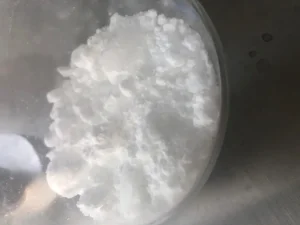
Cleanroom Class A/B freeze-drying chambers ensure stable, crystalline cakes with optimized dissolution kinetics, prolonged shelf-life stability, and zero cross-contamination risk for commercial release.
Transparent commercial tiering designed for CRO exploratory stages, clinical translation, and industrial CDMO manufacturing campaigns.
| Tier / Scale | Target Purity | Net Peptide Content | Lead Time | Analytical Package | Price Bracket (USD) |
|---|---|---|---|---|---|
| Exploratory (1g - 10g) | ≥98.0% (HPLC) | ≥80.0% | 10 - 14 Days | CoA, HPLC, MS Identity | $45 – $75 / gram |
| Preclinical Pilot (50g - 250g) | ≥98.5% (HPLC) | ≥85.0% | 2 - 3 Weeks | CoA, HPLC, MS, Water, Residuals | $28 – $42 / gram |
| Scale-Up Development (500g - 2kg) | ≥99.0% (HPLC) | ≥85.0% (Acetate) | 3 - 4 Weeks | Extended CMC, Endotoxin, Bioburden | $15 – $24 / gram |
| Commercial Multi-Kilogram (5kg+) | ≥99.0% to ≥99.5% | Custom Specified | Scheduled Delivery | Full cGMP Documentation & Audits | Custom CDMO Quote |
*Note: Final pricing depends on counter-ion requirements (Acetate vs. TFA), sterile filtration protocols, and custom vialing or packaging criteria.
Where leading research institutes, biotechnology pioneers, and commercial formulators apply synthetic Hexarelin APIs.
Investigated heavily for attenuation of myocardial ischemia-reperfusion injury. Its interaction with cardiac CD36 receptors exhibits strong anti-apoptotic responses in cardiomyocytes independently of GH release.
Utilized in pre-clinical models targeting sarcopenia, muscle wasting syndromes, and cachexia. Hexarelin promotes protein synthesis pathways and mitigates calcium efflux anomalies in striated muscle tissue.
Valued in analytical settings to evaluate pituitary somatotropic reserve. Hexarelin exhibits robust reproducibility and resistance to somatostatin-induced blunting during pituitary dynamic functional challenges.
Critical parameters senior procurement directors, QA auditors, and formulation chemists must verify before issuing purchase orders.
Always inspect the full analytical HPLC run up to 40 minutes. Ensure single unspecified impurities do not exceed 0.5%, with total deletion sequences rigorously cataloged via LC-MS.
Specify the desired counter-ion early. TFA salt forms are common for initial R&D, but clinical applications mandate Acetate or HCl exchange with documentation of conversion efficiency.
Verify that the production facility employs depyrogenated glassware and endotoxin-tested water systems (WFI), guaranteeing bacterial endotoxin specs under <0.1 EU/mg or tailored client tiers.
Lyophilized Hexarelin should be sealed under vacuum or high-purity inert nitrogen gas. Cold-chain (-20°C) monitoring during overseas dispatch protects against peptide hydrolysis and degradation.
Immediate clarity on operational, scientific, and global distribution inquiries regarding custom peptide supply.
Hexarelin provides superior biological stability due to unnatural D-amino acid substitutions. Moreover, while GHRP-6 binds primarily to GHS-R1a to stimulate hunger and GH, Hexarelin binds selectively to the CD36 scavenger receptor, showing documented cardiovascular and anti-ischemic benefits in preclinical models without stimulating significant appetite.
Yes. Although standard synthetic batches yield TFA salts, our factory operates dedicated ion-exchange chromatography systems to exchange TFA for pharmaceutical-grade Acetate or Hydrochloride salts, accompanied by IC or GC testing proving residual TFA < 0.2% or non-detectable.
China manufactures over 70% of global upstream raw materials, including specialized protected amino acids (Fmoc-D-Trp, Fmoc-D-Phe) and advanced coupling reagents (HATU, HBTU). Direct domestic integration eliminates material import delays and reduces overhead, resulting in 40-60% pricing advantages at multi-kilogram scale.
Every batch includes an extensive Certificate of Analysis (CoA) containing Analytical RP-HPLC traces, Electrospray Ionization Mass Spectrometry (ESI-MS) reports, net peptide content assays, Karl Fischer water content determinations, and microbial/endotoxin testing certificates.
Complete peptide procurement options across metabolic modulators, neuroactive oligopeptides, and advanced tissue repair complexes.

 Thin