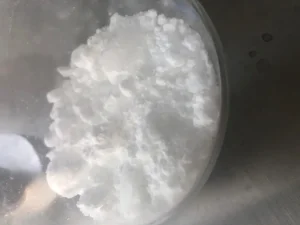
Verified molecular integrity, chromatographic purity profiles ≥ 98.0%, and comprehensive mass spectrometry characterization for immediate pilot or commercial procurement.




Addressing the thermodynamic and kinetic barriers of complex peptide synthesis. Thinheal leverages automated solid-phase peptide synthesis (SPPS), liquid-phase segment condensation (LPPS), and continuous preparative chromatography to secure unmatched impurity control.
Mastery of Fmoc/tBu and Boc/Bzl protective chemistry enables the synthesis of highly hydrophobic segments, sterically hindered α,α-dialkyl amino acids, and poly-cysteine disulphide networks without epimerization or premature cleavage.
Regioselective folding of intra-chain disulfide linkages for complex peptides like Linaclotide (3 intramolecular S-S bonds) using Trt, Acm, and Mob protecting groups, achieving high refolding yields while preventing mispaired structural topological isomers.
Industrial cleanroom freeze-drying facilities eliminate residual organic solvents (acetonitrile, DMF, NMP) and regulate crystalline hydration states, ensuring batch-to-batch solubility and high stability in cold-chain distribution.
Peptide drugs exhibit unparalleled specificity and favorable safety profiles compared to small-molecule entities. Thinheal designs customized peptide formulations suited for territorial regulatory approvals and therapeutic indications worldwide.
The exponential surge in diabetes, non-alcoholic steatohepatitis (NASH), and chronic weight management therapies has heightened international reliance on GLP-1/GIP/GCG dual and tri-agonists. Our synthetic pipelines supply industrial Tirzepatide, Mazdutide, Semaglutide, and Cargrilintide analogs with high purity, minimizing immunogenic desamido and truncated peptide variants.
Peptides such as Thymalin (CAS 63958-90-7) and neuro-protective bioregulators like Semax (CAS 80714-61-0) serve targeted applications across Eastern Europe, Russia, and Central Asia. They assist in post-ischemic neurological rehabilitation, immune reconstitution, and cellular longevity through telomerase activation and T-cell differentiation pathways.
Meeting stringent European Cosmetic Regulations (EC 1223/2009) and US MoCRA mandates, our high-purity cosmetic peptides—such as Copper Tripeptide-1 (GHK-Cu), palmitoylated matrixins, and acetyl hexapeptides—catalyze extracellular matrix (ECM) collagen remodeling, dermal wound healing, and wrinkle attenuation.
Synthetic gonadotropin-releasing hormone (GnRH) agonists such as Deslorelin (CAS 57773-65-6) and Bremelanotide (PT-141) address human sexual dysfunctions as well as equine, canine, and bovine reproductive synchronization in Latin America, Australasia, and North American agricultural markets.
Short bowel syndrome and severe IBS-C therapeutics necessitate synthetic peptides that withstand proteolytic gastrointestinal enzymes. APIs including Eptifibatide (CAS 188627-80-7) for anti-platelet stabilization and Linaclotide provide localized cellular surface guanylate cyclase-C (GC-C) activation with near-zero systemic toxicity.
Mitochondrial-derived peptides like MOTS-c (16-amino-acid peptide) mimic exercise-induced metabolic adaptations, activating AMPK cascades to reverse insulin resistance and cellular senescence. Sourced by high-tier biomedical research institutes in North America and Asia-Pacific.
The global pharmaceutical manufacturing landscape demands swift turnaround, uninterrupted raw material supply, and competitive unit economics. Hangzhou Thinheal's industrial base exemplifies China's mature peptide supply chain infrastructure.
Unlike Western facilities constrained by fragmented reagent procurement, our Hangzhou base resides within China’s prime chemical manufacturing cluster. We source standard and unnatural amino acids (e.g., Aib, D-Ala, γ-Glu linkers, octadecanedioic acid mono-tert-butyl esters), coupling agents (HATU, PyBOP, HOBt), and functionalized polystyrene/CTC resins directly from domestic chemical hubs. This eliminates shipping lag and provides cost insulation during raw chemical market volatility.
Equipped with 50L to 3000L solid-phase reaction vessels and industrial-scale column chromatography suites (up to DAC 1000mm dynamic axial columns), our manufacturing site scales synthesis throughput from 100g pilot runs to multi-ton generic drug substance deliveries. Automated solvent metering and wash cycles reduce cycle times by over 45% compared to manual facilities.
China graduates the world’s largest pool of chemical engineers and analytical scientists annually. Our R&D center operates continuous three-shift syntheses, in-process HPLC validations, and mass spec verifications. This workforce continuity accelerates synthetic route scouting and stability validation while maintaining competitive pricing across our therapeutic portfolio.
Located in Phase 5, Heda Medicine Valley, Qiantang District, Thinheal is embedded in Zhejiang's premier life-science corridor. Direct access to international air freight hubs (Shanghai PVG, Hangzhou HGH) guarantees validated temperature-controlled (-20°C / -80°C dry ice) logistics for biological peptide payloads worldwide.
Transitioning beyond traditional manual synthesis. Our engineering trajectory integrates computational chemistry, green manufacturing protocols, and semi-automated continuous manufacturing systems to meet emerging pharmaceutical benchmarks.
Replacing reprotoxic solvents like DMF and NMP with bio-based green solvents (Cyrene, 2-MeTHF) and optimizing TFA cleavage cocktails. This reduces environmental burden while mitigating trace organohalogen impurities in finished peptide active substances.
Integrating microwave-assisted heating and continuous flow microreactors to suppress intra-chain hydrogen aggregation during the synthesis of challenging, aggregation-prone sequences (e.g., Amyloid beta, long GLP-1 analogs exceeding 35 residues).
Deploying algorithmic sequence analysis to identify high-risk epimerization hotspots (such as Asp-Gly β-shift or Cys racemization) prior to scale-up, lowering experimental reagent consumption and accelerating first-pass process validation.
Expanding capabilities toward Peptide-Drug Conjugates (PDCs), radio-labeled chelators (DOTA/NOTA), stapled α-helical peptides, and lipopeptide fatty-chain conjugations designed for oral peptide bioavailability and prolonged half-lives.
The worldwide peptide market is projected to surpass $65 Billion by 2030, driven by the expiry of foundational metabolic patents and accelerated clinical adoption of synthetic agonists over recombinant counterparts.
| Indication / Drug Class | Representative Molecules | Technical Bottlenecks | Thinheal Process Solution | Commercial Advantage |
|---|---|---|---|---|
| GLP-1 / GIP Dual & Tri-Agonists | Semaglutide, Tirzepatide, Mazdutide | Long amino-acid sequences (31–39 AAs), complex fatty acid side chains, hydrophobic aggregation. | Fragment coupling strategy, high-load resin matrix, specialized lipid chain orthogonal synthesis. | Multi-ton commercial delivery, lower cost-of-goods (COGS) for generic dossier submissions. |
| Multiple Disulfide Peptides | Linaclotide (3 bonds), Plecanatide (2 bonds) | Isomer misfolding, oligomerization, low cyclization yields under standard oxidative conditions. | Regioselective protective group deprotection (Acm/Trt/Mob) with spectrophotometric validation. | Pure isomer uniformity (>98.5%), minimal biologically inactive stereoisomer content. |
| Synthetic GnRH / Hormonal | Deslorelin, Leuprolide, Triptorelin | C-terminal ethylamide / hydrazide modifications, high potency demanding strict containment. | Solution-phase C-terminal segment amidation coupled with high-efficiency chromatographic polish. | High lot-to-lot consistency, low batch variation for veterinary and clinical applications. |
| Mitochondrial & Nootropic Peptides | MOTS-c, Semax, Selank, Epithalon | Short sequence chemical stability, hygroscopicity, sterile endotoxin thresholds. | Precision freeze-drying parameters with controlled acetate/TFA counter-ion exchange. | Readily dissolvable lyophilized cakes with verified long-term room-temperature stability. |
| Bio-Aesthetic Cosmeceuticals | GHK-Cu, Acetyl Hexapeptide-8, Palmitoyl-tripeptides | Copper chelation ratios, free heavy metal impurities, skin permeability balance. | Stoichiometric copper salt complexation, ultrafiltration to remove free Cu2+ ions (<0.05%). | Skin-safe, non-irritating, consistent coloration, and global regulatory compliance (INCI registered). |
Purity figures mean little without verified analytical data. Our quality management system operates in accordance with ICH Q7 and Q11 guidelines, supporting regulatory submissions across the US FDA, EMA, NMPA, and PMDA.
Every lot undergoes RP-HPLC and SE-HPLC analysis on diverse stationary phases (C18, C8, Phenyl-Hexyl). We report single maximum impurities (≤0.5%), total impurities, and deamidation, sulfoxide, and D-amino acid stereoisomers.
Sequence identification through ESI-TOF, MALDI-TOF, and tandem MS/MS fragmentation sequencing. Confirms molecular weight with monoisotopic precision, validating correct sequence assembly and lack of truncated deletion impurities.
We specify peptide content by elemental nitrogen or amino acid analysis (AAA), residual trifluoroacetic acid (TFA), acetate levels via ion chromatography (IC), moisture via Karl Fischer (KF), and residual solvents via Headspace GC-MS.
Lyophilized APIs for parenteral injection meet strict bacterial endotoxin criteria (<5 EU/mg via Turbidimetric/Chromogenic LAL assays) and USP <61>/<62> microbial limits, manufactured in Grade C/A cleanroom environments.
Validated stability studies under long-term storage (-20°C ± 5°C), accelerated conditions (25°C ± 2°C / 60% RH), and forced degradation (photostability, oxidation, thermal, pH stress) establish sound shelf-life profiles.
Full CMC support with Module 3 CTD documentation (3.2.S.1 to 3.2.S.7) for global client ANDA, IND, and NDA filings, covering detailed synthesis routes, raw material controls, process validation, and analytical method validations.
Procuring clinical peptide APIs requires native regulatory fluency, localized shipping documentation, and multi-currency invoicing. Thinheal operates four direct regional sales teams for prompt communication.
cGMP documentation, FDA DMF submission support, customs tariff guidance.
Email: [email protected]
Tel/WhatsApp: +86 18858158962
EAC compliance, native Russian correspondence, cold-chain transshipment.
Email: [email protected]
Tel/WhatsApp: +86 19956369799
PMDA, MFDS & local ministry import filings, rapid airfreight dispatch.
Email: [email protected]
Tel/WhatsApp: +86 13628476528
Halal manufacturing compliance, specialized re-export logistical routing.
Email: [email protected]
Tel/WhatsApp: +86 13357150101
Technical insights from our chemical synthesis leads and QA directors regarding specifications, regulatory dossiers, and procurement logistics.
Chromatographic purity (determined by RP-HPLC at 214nm or 220nm) measures the relative peak area percentage of the target peptide molecule relative to closely related peptide substances (deletion sequences, insertion sequences, stereoisomers, and truncated fragments). In contrast, net peptide content quantifies the actual percentage by weight of peptide molecules relative to counter-ions (such as acetate or trifluoroacetate), bound water of crystallization, and residual inorganic salts. A peptide with 99% HPLC purity may have a net peptide content of 75% to 85%. Sourcing managers should verify net peptide content to calculate accurate stoichiometric dosing in biological assays and clinical formulation runs.
During solid-phase peptide synthesis (SPPS), TFA is commonly used to cleave peptides from the solid support and remove acid-labile protecting groups. However, trace residual TFA (>1.0%) exhibits cellular toxicity, inhibits cellular proliferation, alters physiological responses in cellular assays, and can cause injection-site irritation in parenteral pharmaceuticals. Thinheal offers automated, multi-cycle ion exchange chromatography to convert peptide trifluoroacetate salts into pharmaceutically acceptable acetate (CH3COO-) or hydrochloride (Cl-) salts, maintaining residual TFA levels below 0.1% or non-detectable thresholds.
Epimerization occurs primarily during carboxyl activation in coupling cycles (particularly with Cysteine and Histidine residues). We suppress racemization using sterically hindered carbodiimide/oxyma pure cocktails or low-temperature coupling parameters, alongside polar aprotic solvent blends. For sequences containing Asp-Gly or Asp-Ala motifs, we utilize backbone protecting groups (such as Hmb or Dmb) to prevent succinimide intermediate formation, eliminating downstream β-aspartyl impurities.
Thinheal supports commercial pharmaceutical sponsors by providing complete Common Technical Document (CTD) Module 3 packages for DMF filings in the US, Europe, and China. Documentation includes: synthetic route characterization, starting material validation, in-process control limits, impurity identification (identification thresholds ≥0.10%), analytical method validation (precision, accuracy, LOD, LOQ per ICH Q2(R1)), batch analysis data across 3 pilot/commercial scale lots, and real-time ICH stability protocols.
Lyophilized peptides remain sensitive to thermal fluctuations, moisture, and UV light exposure. Thinheal ships commercial active substances in sealed, nitrogen-flushed pharmaceutical-grade glass vials or heat-sealed multi-layer aluminum laminate moisture-barrier pouches. International consignments are packaged inside validated VIP (Vacuum Insulated Panel) thermal containers with calibrated USB/NFC temperature data loggers, utilizing dry ice (-80°C) or phase-change materials (-20°C) to guarantee stability during transcontinental air transit.
Explore additional ready-to-scale peptide substances, dual incretin agonists, and bio-identical peptides manufactured in our Hangzhou production base.


Send sequence parameters, required purity criteria, target counter-ions, and projected annual quantities. Our technical sales team and senior peptide chemists will respond with route assessments and binding quotations within 24 hours.
 Thin