 Thin
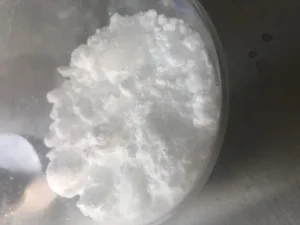
Standardized cGMP synthetic batches tested through validated reverse-phase HPLC and LC-MS spectrometry for international research, clinical translation, and commercial supply chains.



Biopharmaceutical platform dedicated to advanced chemical synthesis and peptide APIs.
Hands-on leadership across synthetic route design, purification scale-up, and cGMP compliance.
Industrialized automated SPPS capacity ensuring seamless international supply stability.
Controlled related substances, ultra-low residual solvents, and endotoxin monitoring.
Bremelanotide, chemically known as PT-141 (Cyclo-[Nle4, Asp5, D-Phe7, Lys10]α-MSH-(4-10)), is a synthetic cyclic heptapeptide analog of α-melanocyte-stimulating hormone (α-MSH). Acting primarily as a non-selective agonist at central melanocortin receptors (predominantly MC3R and MC4R), PT-141 bypasses vascular mechanisms, operating upstream in the central nervous system to modulate neurobehavioral, appetite, and sexual arousal pathways. Historically administered via subcutaneous injections, the market demand has pivoted decisively toward Pt 141 peptide oral and sublingual dosage forms.
Oral administration of cyclic peptides like PT-141 faces gastrointestinal obstacles including luminal pepsin, trypsin, chymotrypsin, and brush-border endopeptidases that cleavage peptide backbones before systemic absorption.
By engineering sublingual troches, fast-dissolving films, and mucosal permeation-enhanced matrices, PT-141 bypasses hepatic first-pass metabolism, allowing intact oligopeptide systemic entry through the lingual venous plexus.
Hangzhou Thinheal Pharma-Tech executes multi-ton SPPS utilizing orthogonal protecting groups (Fmoc/tBu/Alloc) to govern the critical intramolecular lactam ring cyclization between Asp5 and Lys10 without racemization.
Strategic procurement executives, generic formulation sponsors, and telehealth platforms face rapid structural shifts when sourcing oral peptide active pharmaceutical ingredients.
Telemedicine providers and contract packagers report over 68% patient preference for oral disintegrating tablets (ODTs) or sublingual suspensions over subcutaneous autoinjectors, demanding micro-dosed, uniform bulk API.
Global formulation teams increasingly replace trifluoroacetic acid (TFA) salts with pharmaceutically acceptable acetate or hydrochloride counter-ions to mitigate excipient incompatibility and cellular cytotoxicity.
Procurement dossiers require deep LC-HRMS characterization identifying potential D-enantiomers, β-Asp rearrangements, and deamidation adducts to clear FDA 505(b)(2) and EMA regulatory pathways.
Thinheal bridges early-stage chemical feasibility with industrial multi-ton chemical synthesis, resolving the engineering bottlenecks that prevent cyclic peptide oral commercialization.
High-throughput automated peptide reactors with real-time UV and conductivity monitoring ensure precise coupling kinetics during each amino acid addition, eliminating sequence truncation.
Preparative and industrial dynamic axial compression (DAC) column systems executing dual-stage orthogonal reverse-phase chromatography (RP-HPLC) deliver target purities beyond 99.0%.
Large-scale cleanroom freeze-dryers control ice nucleation, primary drying, and secondary desorption, yielding uniform amorphous lyophilizates suited for direct compression tableting.
Thinheal bridges international borders through specialized sales and regulatory operations across key pharmaceutical hubs, guaranteeing complete document integrity and supply chain transparency.
Dedicated project teams aligned with FDA DMF submission guidelines, European Pharmacopoeia (Ph. Eur.) monographs, and REACH registrations.
Complete documentation translation, customs fast-tracking for temperature-sensitive cold chains, and localized technical dossiers.
Seamless raw material procurement services serving emerging biotech clusters across Japan, South Korea, India, and Southeast Asia.
Regional procurement support, customs compliance documentation, and multi-currency commercial settlement channels.
The future of oral peptides depends on integrating molecular stability modifications with bioengineered transport mechanisms. Thinheal’s R&D center actively advances three core technological platforms.
Self-emulsifying drug delivery systems (SEDDS) and lipid nanoparticle (LNP) matrices engineered to shield the cyclic peptide from gastrointestinal proteases while facilitating lymphatic transport.
Machine-learning models optimizing coupling times, eliminating toxic solvents like DMF in favor of greener reagents (Cyrene/2-MeTHF), and reducing overall process mass intensity (PMI).
Co-formulation development utilizing advanced alkylsaccharides and modified cell-penetrating peptides (CPPs) to temporarily open tight junctions without triggering long-term mucosal irritation.
Detailed answers addressing bioavailability, synthesis specifications, and contract manufacturing procedures.
Bremelanotide is a cyclic heptapeptide. While its cyclic structure provides higher stability against exopeptidases than linear peptides, it suffers from poor oral bioavailability (< 1-2%) due to luminal endopeptidases and poor intestinal epithelial permeability. Successful oral or sublingual formulations require specialized permeation enhancers (such as SNAC or bile salts) or mucosal delivery films to reach therapeutic plasma concentrations.
Racemization of D-Phenylalanine is a well-known vulnerability during solid-phase peptide synthesis. Thinheal implements low-temperature coupling protocols, optimized carbodiimide/oxyma activating mixtures, and continuous in-process chiral HPLC testing to guarantee optical purity ≥ 99.5%, preventing trace D/L stereoisomer impurities.
Yes. While crude peptides are synthesized via TFA cleavage cocktails, our downstream industrial chromatography incorporates automated counter-ion exchange columns, converting TFA salts into pharmaceutical-grade acetate or hydrochloride salts with residual TFA controlled well below 0.1% or non-detectable levels.
Every commercial batch comes with an exhaustive Certificate of Analysis (CoA) containing reverse-phase HPLC purity, LC-MS identity, residual water (Karl Fischer), residual solvents (GC-MS), counter-ion content, bioburden, and bacterial endotoxin testing. Additional regulatory stability and DMF technical files are available upon review.
Multi-ton synthesis capacity backing high-barrier peptide targets for international pharma and research enterprises.
