Manufactured under stringent quality matrices, featuring comprehensive HPLC and LC-MS analytics for research, clinical trials, and drug manufacturing programs.


HPLC Typical API Purity
Annual Synthesis Capacity
Bacterial Endotoxin Control
Panama Hub Air-Cargo Transit
Panama occupies a uniquely advantageous position within global biotechnology logistics. Anchored by the Colón Free Trade Zone (Zona Libre de Colón) and Tocumen International Airport's specialized cargo infrastructure, the country has transformed from a transit hub into a central distribution and cold-chain staging ground for advanced biopharmaceuticals across Central and South America.
Domestic demand is simultaneously expanding. Healthcare institutions, private clinical networks, and regional biotechnology academic programs in Panama City are experiencing an unprecedented surge in demand for high-complexity therapeutic peptides. These range from incretin-based metabolic therapies (GLP-1 and dual GCG/GLP-1 receptor agonists) to tissue regenerative peptides.
While local compounding centers and bio-distributors in Panama provide immediate fulfillment, regional pharmaceutical ventures consistently encounter supply disruptions and inconsistent net peptide content when relying on intermediate brokers. Sourcing directly from an established primary synthesis base eliminates batch variance, bypasses secondary price markups, and provides native analytical dossiers (HPLC, MS, Elemental Analysis) indispensable for national regulatory approval.
Combining automated large-scale solid-phase peptide synthesis (LPPS/SPPS) with digital process control to bridge the global life-science supply gap.
Industrial DCS-governed reactors eliminate human calibration drift during coupling cycles. High-efficiency coupling reagents optimize yield on difficult sterically hindered sequences and hydrophobic peptide segments exceeding 30 amino acids.
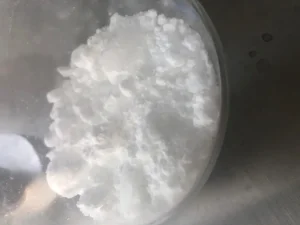
Continuous dynamic axial compression (DAC) HPLC columns ranging up to 600mm paired with industrial lyophilization tunnels yield crystalline peptide APIs with net peptide content strictly quantified and counter-ion profiles fully customized (TFA or Acetate exchange).
Direct air-cargo connectivity from Hangzhou to Panama City under validated cold-chain packaging (active temperature-controlled dry ice / -20°C gel logging) ensures that temperature-sensitive biologics arrive without peptide backbone cleavage or aggregation.
Therapeutic peptide procurement requires deep technical scrutiny. Understanding the chemical differentiators protects formulation integrity and therapeutic efficacy.
Racemization during peptide assembly represents an invisible risk. Advanced chromatographic separation profiles assess D-enantiomer thresholds, guaranteeing that receptor binding affinity remains uncompromised across commercial formulations.
Rigorous monitoring of scavengers, cleavage reagents, piperidine, and heavy metals (palladium, copper catalysts) via ICP-MS to comply with stringent limits on residual solvents (USP <467>) and ensure safety in parenteral applications.
Every batch destined for Panama and Latin American re-export is backed by verifiable analytical records: high-resolution HPLC chromatograms, electrospray ionization mass spectrometry (ESI-MS), Karl Fischer moisture content, and TFA residue analysis.
Targeted therapeutic applications driving research, clinical formulation, and distribution throughout the Isthmus of Panama.
With obesity and type 2 diabetes presenting widespread clinical burdens throughout Central America, Panamanian medical specialists and clinical research entities are prioritizing incretin mimetics. Multi-target dual agonists (such as Mazdutide and Tirzepatide) and melanocortin-4 receptor agonists (Setmelanotide) represent the critical vanguard for next-generation metabolic intervention programs.
Panama's world-renowned specialized cellular medicine and stem cell institutes frequently explore synergistic peptide therapies. Sequences like BPC-157, Thymosin Beta-4 (TB-500), and Thymosin Alpha-1 are extensively investigated for their biological roles in angiogenesis promotion, inflammatory modulation, and immune-system rejuvenation.
Fully scalable manufacturing lots available for clinical trials, generic dossier formulation, and commercial distribution.


Essential answers for quality assurance leaders, regulatory affairs teams, and strategic sourcing directors.
All shipments are packaged in validated vacuum-insulated containers (VIP) with phase-change materials or dry ice tailored to maintain temperatures between -20°C and 2-8°C. Continuous digital USB/NFC dataloggers monitor shipment conditions during transit until final arrival at Tocumen Airport (PTY) or Panama Pacifico.
Yes. For preclinical research or pharmaceutical development where TFA-induced cellular cytotoxicity is a concern, we provide ion-exchange purification to convert peptides to acetate or hydrochloride salt forms, keeping residual TFA below 0.1% or <1.0% per your exact specifications.
Each batch is shipped with a comprehensive Certificate of Analysis (CoA) including analytical RP-HPLC purity traces, High-Resolution Mass Spectrometry (HRMS) identification, Karl Fischer moisture testing, Net Peptide Content by nitrogen analysis, and endotoxin assay results.
Standard solid-phase synthesis for novel research-grade peptide sequences requires approximately 2-3 weeks from sequence verification to lyophilization. For multi-kilogram pilot or commercial campaigns, technical transfer and scale-up timelines are coordinated directly with your dedicated project manager.
Whether you require standard GLP-1 analogues, regenerative peptides, or proprietary modified sequences for projects in Panama or globally, our scientific team is prepared to consult on process optimization and scale-up supply.
Send Inquiry Now Thin