 Thin

Dual-Action Agonist
Accelerating drug development across Greater Copenhagen and Zealand biotech ecosystems with GMP-aligned peptide analogues, rigorous HPLC/HRMS validation, and rapid technical quote processing.

A rigorous examination of Denmark’s unique biotech landscape, Medicon Valley clustering, and the structural imperatives driving outsourced peptide API synthesis.
Denmark stands as the uncontested vanguard of global peptide therapeutic development. Anchored by world-renowned conglomerates headquartered in Bagsværd, Gentofte, and Hørsholm, the Greater Copenhagen Region—interlinked with southern Sweden across the Øresund bridge—comprises the Medicon Valley cluster. This concentrated biopharma ecosystem accounts for over 20% of Denmark's total export economy, predominantly driven by groundbreaking peptide drug substances targeting Type 2 Diabetes Mellitus (T2DM), severe obesity, short bowel syndrome, and cardiovascular risk reduction.
However, this meteoric domestic growth creates unprecedented supply-side friction. Commercial contract manufacturing organizations (CMOs) throughout Western Europe operate at peak capacity, leading to extended campaign lead times (often 12–18 months) for GLP-1, GIP, and glucagon receptor co-agonists. Emerging Danish biotech startups, academic spin-outs from the University of Copenhagen (UCPH) and Danmarks Tekniske Universitet (DTU), as well as clinical-stage generic formulation developers, require agile, responsive supply channels that can provide gram-to-multi-kilogram scale peptide active pharmaceutical ingredients (APIs) without exorbitant turnaround bottlenecks.
Translational oncology, neurological peptides (e.g., Semax, Selank derivatives), and tissue-regeneration sequences (BPC-157, TB-500) demand rapid batch turnaround for Pre-IND characterization and animal model profiling in Danish research parks.
Compliance with Lægemiddelstyrelsen requires comprehensive impurity profiling, host cell protein exclusion, absolute enantiomeric purity (chiral HPLC), and quantifiable endotoxin thresholds (<0.01 EU/mg) for sterile parenterals.
European pharmaceutical risk mitigators require qualified secondary and tertiary API manufacturing partners outside the eurozone to guarantee supply security against localized factory disruptions or raw material price spikes.
Synthesizing next-generation therapeutic modalities for chronic cardiometabolic syndrome, cellular repair, cosmeceutical derma-cosmetics, and specialized endocrine interventions.
The paradigm of metabolic medicine has shifted from single receptor monotherapies to multi-agonist synergies. In Danish clinical studies, dual GLP-1/GIP receptor agonists and tri-agonists (GLP-1/GIP/Glucagon) have exhibited extraordinary efficacy in visceral adiposity reduction and metabolic dysfunction-associated steatohepatitis (MASH). Analogues such as Cargrilintide (an acylated amylin analogue) are co-administered with GLP-1 analogues to trigger simultaneous hunger suppression pathways via the calcitonin receptor core and arcuate nucleus.
Our automated large-scale Solid-Phase Peptide Synthesis (SPPS) ensures meticulous sequence elongation, completely preventing truncated amino acid omissions (e.g., [des-Val] or [des-His] conformers) which often compromise binding affinities at the incretin interface.
Danish research centers leading connective tissue, cartilage re-vascularization, and tendon reconstruction programs heavily rely on pentadecapeptides like BPC-157 and Thymosin β4 (TB-500). BPC-157 mediates early growth response 1 (Egr-1) gene expression and up-regulates vascular endothelial growth factor receptor 2 (VEGFR2), demanding strict freedom from trifluoroacetic acid (TFA) residues.
Our specialized multi-step counter-ion exchange delivers pharmaceutical-grade Acetate salts with residual TFA levels precisely quantified below 0.10% by 19F-NMR and ion chromatography, ensuring biocompatibility during in vivo animal model research.
The Nordic clean-beauty and clinical derma-cosmetics market requires uncompromising material consistency. Copper Tripeptide-1 (GHK-Cu) is widely incorporated by Scandinavian cosmetic brands for extracellular matrix synthesis, collagen type I/III upregulation, and anti-inflammatory micro-wound healing.
Our process guarantees accurate stoichiometric complexation between the synthetic Gly-His-Lys tripeptide backbone and Cu2+ ions, eliminating free unbound copper ions that cause formulation discoloration and oxidation-reduction lipid destabilization.
Cognitive decline, central nervous system ischemia, and melanocortin pathway exploration in Nordic neurobiology centers require specialized heptapeptides such as Semax (ACTH 4-10 analogue) and Bremelanotide (PT-141).
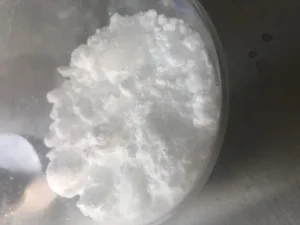
Our lyophilization protocol maintains a porous, uniform amorphous cake structure with moisture contents tightly maintained under 3.0%, ensuring long-term solid-state stability when handled in laboratory environments across Aarhus, Odense, and Aalborg.
Combining world-leading multi-ton synthetic peptide capacity in Hangzhou with rigorous European GMP alignment, eliminating supply fragility for Danish procurement teams.
Our integrated chemical infrastructure eliminates single-source dependencies. All Fmoc-, Boc-, and Cbz-protected amino acids, specialized coupling reagents (HATU, PyBOP, DIC/Oxyma), and modified fatty acid side chains (e.g., mono-tert-butyl octadecanedioate for incretin acylation) are synthesized in-house or under dedicated captive supply contracts.
Equipped with DAC (Dynamic Axial Compression) columns ranging from 300mm to 1000mm diameter and high-performance reverse-phase industrial systems (RP-HPLC), our production facilities achieve sharp separation of isobaric impurities, diastereomers, and beta-aspartyl rearrangements at multi-kilogram batch yields.
In accordance with Danish industrial sustainability mandates and EU Net-Zero goals, our Hangzhou manufacturing facility actively adopts modern peptide synthesis protocols: recycling DMF and NMP, utilizing greener solvent alternatives (2-MeTHF, Cyrene), and operating closed-loop condensation solvent recovery systems.
| Evaluation Metric | Thinheal Direct Factory | Traditional EU Re-Sellers |
|---|---|---|
| Pricing Advantage | Factory direct, zero broker margin (40-60% savings) | Substantial intermediate markups applied |
| Analytical Transparency | Full raw 2D-NMR, LC-MS, HPLC, & residual solvent traces | Generic summary Certificates of Analysis (CoA) |
| Batch Scalability | Gram-scale R&D through 50kg+ commercial runs | Frequently capped at gram-scale research quantities |
| Cold-Chain Transit to CPH | Direct temperature-logged air freight (3-5 days) | Multi-hop domestic cross-docking delays |
| Regulatory Support | Direct access to CMC authors, DMF submission dossiers | Third-party delays in obtaining source audit data |
Bridging traditional peptide chemistry with next-generation continuous flow synthesis, biocatalytic enzymatic ligation, and AI-optimized cleavage protocols.
Long-sequence peptides (>30 amino acids) such as Survodutide and Dulaglutide face aggregation issues inside batch reactors due to intermolecular beta-sheet formation during chain assembly. Our development labs have pioneered microfluidic continuous-flow SPPS technology.
By running reagent steams through heated micro-reactors at elevated pressures, reaction cycles for deprotection and amino acid coupling drop from hours to minutes, suppressing racemization of fragile residues (Cysteine, Histidine) while maximizing overall crude purity beyond 85% prior to preparative chromatography.
To reduce chemical waste and sidestep complex stereocenter degradation during fragment condensation, our technical roadmap incorporates specialized engineered peptide ligases (subtiligase variants and sortase enzymes).
This hybrid approach allows the chemical synthesis of short, ultra-pure peptide segments followed by stereospecific, high-yield enzymatic fragment coupling in aqueous buffers at room temperature—an innovation of vital interest to Denmark-based green pharmaceutical manufacturers.
Stringent compliance packages engineered to seamlessly clear EDQM, EMA, Danish Medicines Agency, and local institutional review board requirements.
Every peptide batch dispatched to Copenhagen, Aarhus, or Odense is accompanied by full analytical dossier verification:
Peptide bioactivity depends strictly on maintaining unbroken thermal chains. We deploy validated thermal insulated packaging with real-time GPS and temperature dataloggers:
For sensitive long-sequence peptide solutions, acylated intermediates, and lyophilized products requiring sub-zero stability during transatlantic transit.
For resilient lyophilized vials, backed by VIP (Vacuum Insulated Panels) designed to maintain interior temperatures for 120+ transit hours, clearing Danish customs seamlessly.
Access competitive batch quotations, comprehensive COA dossiers, and scalable manufacturing supply across our extended peptide line.


Straightforward answers regarding Danish customs logistics, regulatory documentation, batch analytical validation, and payment flexibility.
Whether you require standard GLP-1 analogues for clinical benchmarking, custom modified peptides for pre-clinical toxicology, or multi-kilogram commercial API supply, our specialist Europe desk is primed to deliver detailed quotes within 24 hours.
Send Inquiry Now