 Thin

Custom Cargrilintide CAS 1415456-99-3 | Long-Acting Amylin Analogue
View Specifications
Factory-direct chemical synthesis with complete chromatographic purification (HPLC >98%-99.5%), high batch uniformity, and commercial-scale multi-ton delivery guarantees.

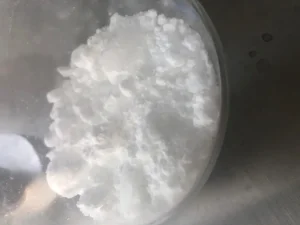


A deep exploration into shifting capacity dynamics, multi-ton scalability challenges, and the structural convergence of high-purity chemical peptide manufacturing.
The peptide therapeutics sector has undergone an unprecedented paradigm shift, fueled overwhelmingly by incretin-based poly-agonists (GLP-1, GIP, and glucagon receptor co-agonists such as Semaglutide, Tirzepatide, and Cargrilintide). Global clinical pipelines require multi-ton synthetic capacity annually to satisfy type 2 diabetes, obesity, metabolic dysfunction-associated steatohepatitis (MASH), and cardiovascular risk indications.
Historically concentrated in North America and Western Europe, the core manufacturing base for raw amino acid building blocks, protected fragments, and large-scale synthetic peptide Active Pharmaceutical Ingredients (APIs) has migrated eastward. Hangzhou and adjacent regional biopharmaceutical corridors in China have established integrated chemical industrial parks capable of synthesizing, purifying, and lyophilizing peptide APIs at unmatched economies of scale.
Global regulatory authorities, notably the US FDA, EMA, and NMPA, have heightened analytical rigor regarding synthetic peptide impurity profiles. Guidelines dictate that any unspecified insertion, deletion, diastereomeric impurity, or beta-sheet aggregate exceeding 0.10% must be fully structurally elucidated, validated via orthogonal High-Resolution Mass Spectrometry (HRMS), and assessed for potential clinical immunogenicity.
Overcoming steric hindrance, racemization, and hydrophobic aggregation through hybrid Solid-Phase/Liquid-Phase peptide methodologies.
Our industrial synthesis platforms utilize advanced Fmoc/tBu orthogonal protection strategies on low-swelling resins (Wang, 2-Chlorotrityl Chloride, or Rink Amide-MBHA). By employing state-of-the-art automated axial-flow solid-phase reactors with integrated real-time UV/NIR deprotection monitoring, coupling kinetics for difficult steric sequences (such as Aib-rich incretins) are optimized using modern uronium/phosphonium reagents (HATU, COMU, PyBOP) to suppress epimerization below 0.05%.
For complex peptides exceeding 35 amino acids, full linear solid-phase synthesis often experiences cumulative yield drop-offs due to sequence truncation. Thinheal leverages chemo-enzymatic and liquid-phase fragment condensation (LPPS). Fully protected, purified peptide segments are coupled in homogeneous liquid solution, allowing high conversion rates, streamlined mid-process clearance, and high atom economy with significant Process Mass Intensity (PMI) reductions.
Downstream processing relies on preparative multi-stage axial-compression High-Performance Liquid Chromatography (Prep-HPLC) with dynamic axial compression (DAC) columns packed with spherical C18 or C8 silica. Purification is followed by critical counter-ion exchange: replacing standard trifluoroacetate (TFA) salts with pharmaceutically compliant acetate, hydrochloride, or sodium salts to meet strict clinical safety and formulation compatibility criteria.
Transparency in biomanufacturing economics: understanding the variables driving research, pilot-scale, and commercial multi-kilogram custom peptide cost schedules.
| Peptide Category | Typical Sequence Profile | Purity Range | Standard Scale Tier | Analytical Package Included | Commercial Pricing Horizon |
|---|---|---|---|---|---|
| GLP-1 / GIP Dual Agonists e.g., Semaglutide, Tirzepatide analogues |
30–40 AAs, lipidated side chains, non-natural AAs | ≥98.0% – 99.5% | 100g / 1kg / 10kg+ | RP-HPLC, HRMS, Amino Acid Analysis, Residual TFA, Water Content, Bioburden | Volume Tiered ($/Gram down to $/Kg commercial quotes) |
| Cyclic & Disulfide Peptides e.g., Eptifibatide, Linaclotide |
6–15 AAs, mono/di-cyclic bridges, head-to-tail | ≥98.5% – 99.0% | 50g / 500g / 5kg | HPLC, MS-MS Fragmentation, Ellman's Free Thiol Verification, Counter-ion | Process Complexity Driven; Custom Synthesis Schedule |
| Neurological & Regulatory Oligopeptides e.g., Selank, Semax, Thymalin |
2–8 AAs, linear unmodified or N-acetylated | ≥98.0% – 99.0% | 100g / 1kg / 50kg | HPLC Purity, ESI-MS, Residual Solvents (GC-HS), Heavy Metals, Endotoxin | High Atom Economy; Cost-Efficient Bulk Manufacturing |
| Dermal & Aesthetic Actives e.g., GHK-Cu, Matrixyl derivatives |
3–6 AAs, metal-chelated or palmitoylated | ≥95.0% – 99.0% | 1kg / 25kg / 100kg+ | HPLC, ICP-MS (for Copper chelation stoichiometry), Impurity profiling | Commercial Wholesale / Container Sourcing Pricelist |
| Custom CDMO / Discovery Libraries Early-stage targets, isotopic labeling, dye-conjugates |
Variable (up to 70 AAs, modified) | >85% to >99% | 1mg – 50g | Custom Analytical Protocol, Stability Indicating Assay, 1D/2D NMR | Per-Project Milestones / FTE Engineering Models |
Critical Sourcing Factor Note: "Raw Gram Price" without specifying Net Peptide Content (NPC) can be deceptive. A peptide batch with 98% chromatographic purity may only possess 75% net peptide content due to hydration and associated counter-ions (acetate or trifluoroacetate). Hangzhou Thinheal provides comprehensive net content calculations on every CoA to ensure your dosing formulations are stoichiometrically precise.
Tailoring raw material attributes, regulatory filings, and cold-chain distribution to regional pharmacopeial standards across major continental markets.
Supplying generic pharmaceutical sponsors, academic research institutions, and 503B compounding centers. Primary demand focuses on Type II Drug Master Files (DMF), stringent microbial and endotoxin specifications (<0.1 EU/mg for parenterals), and stability data packages aligned with USP <1058> and ICH Q1A(R2) conditions. Cold-chain dry-ice logistics with continuous temperature datalogging ensure peptide tertiary structures remain intact.
Compliance hinges on Certificate of Suitability (CEP) readiness, strict adherence to European Pharmacopoeia (Ph. Eur.) monographs for synthetic peptides, and compliance with EU Annex 1 sterile manufacturing regulations. Cosmetic formulation sectors require full REACH dossiers, toxicological risk assessments (CPSR), and guaranteed heavy metal thresholds below 5 ppm (Lead, Arsenic, Cadmium, Mercury).
Rapidly growing biotech landscapes in South Korea, Singapore, Japan, and the Middle East require versatile contract manufacturing for therapeutic biosimilars and aesthetic regenerative serums. We supply flexible batch sizes from 500 grams to hundreds of kilograms, accompanied by comprehensive bilingual documentation and dedicated regional account managers located in our Hangzhou export desks.
Bridge the critical divide between milligram proof-of-concept discovery and metric-ton commercial market supply with our validated synthesis workflows.
Initial analysis identifies steric aggregation hotspots, deamidation hazards, and oxidation-sensitive residues (Met, Cys, Trp). We construct optimized synthetic pathways using micro-wave assisted SPPS and proprietary orthogonal coupling cascades, minimizing chemical reagent excess while boosting raw fragment coupling yields above 99.2%.
Transitioning to pilot scale involves identifying Critical Quality Attributes (CQAs) and Critical Process Parameters (CPPs). We execute systematic Design of Experiments (DoE) covering resin loading density, cleavage cocktail ratios (TFA/EDT/TIS/H2O), and gradient elution kinetics to construct a robust commercial manufacturing design space.
Our Hangzhou production base features industrial lyophilization arrays equipped with CIP/SIP systems, automated vial loading, and precise vacuum control. We prevent peptide aggregation, control cake moisture under 3.0%, and deliver consistent dissolution profiles necessary for finished parenteral formulations.
Addressing essential technical, analytical, regulatory, and logistics queries directly from global pharmaceutical and cosmetic sourcing executives.
Expanding your commercial formulation possibilities: high-potency bioregulators, cyclic receptor antagonists, and clinically validated anti-aging peptides.