 Thin

Direct supply line from our Hangzhou multi-ton peptide synthesis base. Batch-tested with analytical trace documentation, mass spectrometry sequencing, and compliant regulatory dossiers.




Understanding the synthetic architecture, telomerase activation mechanics, and chemical specifications governing institutional peptide procurement.
Epitalon (Epithalon, CAS No. 307297-39-8) is a synthetic tetrapeptide comprised of the sequence L-alanyl-L-α-glutamyl-L-α-asparagyl-glycine (Ala-Glu-Asp-Gly / AEDG). Derived originally from epithalamin—a bovine pineal gland peptide extract investigated for decades by the Saint Petersburg Institute of Bioregulation and Gerontology—Epitalon acts as a putative telomerase transcriptional upregulator and neuroendocrine modulator. In commercial biotechnology, the peptide is recognized for its capacity to overcome the Hayflick limit in non-transformed somatic cells by stimulating endogenous telomerase reverse transcriptase (TERT) expression.
Unlike primitive animal-tissue extracts that carried persistent batch variability and immunogenic contamination risks, modern biotechnology relies strictly on Solid-Phase Peptide Synthesis (SPPS) and Liquid-Phase Fragment Condensation (LPPS) to yield Epitalon with chemical purity exceeding 99.0%. As life-extension medicine, anti-senescence biogerontology, and epigenetic modulation enter clinical validation cycles globally, procurement teams require scalable chemical synthesis partners capable of mitigating diastereomeric impurities (e.g., D-Glu or D-Asp enantiomers) and minimizing residual counter-ions (such as trifluoroacetate / TFA).
| Quality Metric | Analytical Method | Thinheal Commercial Grade | Pharmaceutical / Injectable Grade |
|---|---|---|---|
| Chemical Purity | RP-HPLC (C18 Column, UV 214/220nm) | ≥ 98.0% (Single Impurity < 1.0%) | ≥ 99.2% (Single Impurity < 0.5%) |
| Molecular Weight Confirmation | ESI-MS / MALDI-TOF | 390.35 ± 0.5 Da (Monoisotopic Peak) | 390.35 ± 0.1 Da Sequence Conformed |
| Net Peptide Content | Elemental Analysis / Amino Acid Analysis | ≥ 80.0% | ≥ 85.0% - 90.0% |
| Counter-Ion Profile | Ion Chromatography (IC) | Trifluoroacetate (TFA) ≤ 8.0% | Acetate Conversion (Acetate ≤ 6.0%, TFA < 0.1%) |
| Bacterial Endotoxins | LAL Kinetic Chromogenic Test | ≤ 10.0 EU/mg | ≤ 2.0 EU/mg (or custom specification) |
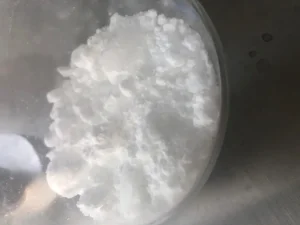
| Physical Appearance | Visual Inspection | White to off-white lyophilized powder | Lyophilized sterile cake / crystalline cake |
Integrated chemical synthesis workflows engineered for yield preservation, enantiomeric fidelity, and regulatory auditability.
Synthesis utilizes highly acid-labile 2-chlorotrityl chloride resin (CTC) or Wang resin. Selective orthogonal protection strategies prevent side-chain carboxyl branching on Asp and Glu residues, completely eliminating aspartimide cyclic side-products.
Automated preparative axial-compression HPLC columns packed with high-efficiency reverse-phase octadecyl-silica (C18) enable precise baseline separation of truncated tetrapeptides (e.g., EDG or ADG fragments) with minimal organic solvent consumption.
Proprietary ion-exchange chromatography replaces toxic trifluoroacetate ions with pharmaceutical-grade acetate salts or hydrochloric counter-ions, followed by controlled Class A cleanroom freeze-drying to protect peptide hydration matrix integrity.
How North America, the European Union, APAC, and the MENA region utilize custom synthesized Epitalon across research, cosmeceuticals, and advanced therapeutics.
Primarily demanded under 21 CFR Part 312 RUO (Research Use Only) designations for epigenetic aging models, in vitro chromatin remodeling, and preclinical cell senescence longevity studies.
Regulated stringently through REACH, EMA guidelines, and cosmetic ingredient safety registries. High demand for acetate-salt converted Epitalon with non-animal origin certifications (BSE/TSE free).
Accelerating integration into anti-aging peptide topicals, transdermal nano-formulations, and preventive metabolic health research in Japan, South Korea, and Southeast Asian biocenters.
Strong legacy familiarity with peptide bioregulators stemming from original neuroendocrine publications. Rapid commercial uptake in longevity hubs across the UAE, Saudi Arabia, and Central Eurasia.
Thinheal's strategic technical path toward ultra-green synthesis, continuous-flow enzymatic catalysis, and advanced nanocarrier drug delivery integration.
Substitution of hazardous DMF and NMP coupling solvents with bio-derived greener alternatives (Cyrene, 2-MeTHF) to curtail industrial carbon footprints.
Transitioning tetrapeptide coupling loops to microfluidic continuous-flow synthesizers, reducing coupling times from 45 minutes to sub-90 seconds with 99.5% conversion.
Deployment of engineered peptide ligases to condense Ala-Glu and Asp-Gly dipeptides in pure aqueous media without side-chain carboxyl protecting groups.
End-to-end CDMO support offering lipid nanoparticle (LNP) encapsulation and cyclodextrin supramolecular complexes for non-invasive mucosal delivery.
Critical analytical and commercial inquiries addressed by our technical peptide chemists and regulatory desks.
We supply Epitalon across two analytical tiers: Commercial Research Grade (≥98.0% HPLC purity) and Clinical / Formulator Grade (≥99.0% to ≥99.5% HPLC purity). Both options include individual impurity deconvolution where no single related substance exceeds 0.5%.
Yes. Because TFA can exhibit cytotoxicity in sensitive biological assays and human clinical models, Thinheal provides ion-exchange resin processing to convert raw TFA counter-ions to biocompatible acetate or hydrochloride salts, guaranteeing residual TFA below 0.1%.
Every batch includes an exhaustive Certificate of Analysis (CoA) featuring high-resolution RP-HPLC chromatograms, electrospray mass spectrometry (ESI-MS) spectra, amino acid analysis (AAA), residual solvent GC scans, moisture titration (Karl Fischer), and bioburden assays.
Custom R&D batches start at 10 grams, while commercial production campaigns easily scale to 10 kg - 100 kg. Standard delivery times range between 2 to 3 weeks for non-stocked custom syntheses, supported by rapid cold-chain express dispatch.
Explore complementary therapeutic peptides, GLP/GIP agonists, and bio-identical regulators produced under identical stringent quality assurance frameworks.
