Direct supply from Hangzhou Thinheal Pharma-Tech synthesis base, featuring automated Solid-Phase Synthesis (SPPS) and strict lot-to-lot consistency.



Understanding coordination equilibria, enantiomeric integrity, and diastereomeric impurity management in industrial peptide engineering.
Glycyl-L-histidyl-L-lysine (GHK) is a naturally occurring human plasma tripeptide first isolated by Dr. Loren Pickart in 1973. While historically evaluated for its innate human bio-affinity, the modern biopharmaceutical and cosmeceutical landscape recognizes GHK—specifically in its divalent copper-chelated state, GHK-Cu (Copper Tripeptide-1, CAS 49557-75-7 / CAS 89030-95-5)—as an indispensable signal and carrier active capable of extensive dermal gene remodeling, enzymatic stimulation, and extracellular matrix (ECM) regeneration.
From an organic chemistry perspective, the tripeptide GHK possesses high affinity for Cu(II) ions, adopting an equatorial square-planar or distorted square-pyramidal coordination geometry. The chelation sequence relies on the deprotonated amide nitrogens of the Gly-His and His-Lys peptide bonds, the imidazole ring's π-nitrogen of histidine, and the terminal amino group of glycine. At physiological pH (7.0–7.4), the formation constant of the GHK-Cu complex is extraordinarily robust (log K ≈ 16.4), outcompeting nonspecific dermal proteins for trace copper while preventing the release of pro-oxidative free hydroxyl radicals through Fenton-type reactions.
Utilizing high-loading 2-Chlorotrityl chloride (2-CTC) resin to prevent C-terminal racemization and diketopiperazine formation during Fmoc-Lys(Boc)-OH deprotection.
Precise molar 1:1 equilibrium loading of copper acetate or copper sulfate under real-time potentiometric pH titration to avoid excess unchelated toxic copper.
Axial compression column purification using reverse-phase C18 stationary phases to eliminate truncated sequences (GK, HK) and des-amido degradation impurities.
However, industrial synthesis presents strict technical bottlenecks: the unprotected histidine imidazole ring readily undergoes epimerization (D-His formation) during coupling, resulting in diastereomeric species that fail to fold properly into the planar copper pocket. Furthermore, unrefined synthesis leads to variable counter-ion contamination, predominantly trifluoroacetate (TFA), which produces severe cytotoxicity in clinical skin barrier models. At Hangzhou Thinheal Pharma-Tech, our multi-ton facility incorporates proprietary low-temperature coupling dynamics and specialized ion-exchange columns, converting TFA into bio-neutral acetate or chloride salts, guaranteeing residual TFA levels below 0.1% or non-detectable thresholds.
Why Tier-1 international pharmaceutical and personal care corporations anchor peptide procurement in Hangzhou's biomanufacturing cluster.
The global sourcing paradigm for custom peptide APIs and premium cosmetic peptides has transitioned decisively toward China's high-tech biomanufacturing zones. Rather than relying on fragmented contract synthesis labs, international procurement directors require multi-kilogram to metric-ton scalability backed by continuous raw-material security. Hangzhou Thinheal Pharma-Tech’s production base exemplifies this industrial maturity through three core structural advantages:
China commands over 70% of the world’s refined chiral amino acid market. Thinheal sources protected amino acids (Fmoc-Gly-OH, Fmoc-His(Trt)-OH, Fmoc-Lys(Boc)-OH) and cutting-edge coupling reagents (HBTU, HATU, DIC, OxymaPure) directly from regional synthesis hubs without transnational shipping delays or duty volatility, compressing total cost of goods sold (COGS) by 35% to 50% relative to Western or Indian CDMOs.
Thinheal operates automated peptide solid-phase reactors scaling up to 1,000-liter single-vessel batches, coupled with industrial lyophilizator banks capable of processing hundreds of kilograms per cycle. Continuous automated solvent recovery loops limit solvent waste, dramatically lowering environmental overhead and passing substantial margin benefits to global buyers.
Through this integrated footprint, Thinheal enables B2B buyers to transition seamlessly from bench-scale exploratory batches (50g to 500g) for stability testing, directly into pilot registration runs (10kg to 50kg), and finally to multi-hundred kilogram commercial manufacturing campaigns without encountering chromatographic transfer discrepancies or yield collapse.
Comprehensive analytical criteria verified via RP-HPLC, Electrospray Ionization Mass Spectrometry (ESI-MS), and ICP-OES elemental analysis.
| Analytical Parameter | Cosmeceutical Grade (GHK-Cu 1:1) | Pharma / Clinical Grade (API Standard) | Testing Methodology | Compliance State |
|---|---|---|---|---|
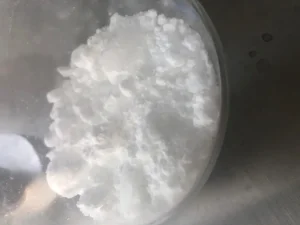
| Chemical Appearance | Intense blue crystalline fine powder | Deep ultramarine microcrystalline powder | Visual / Colorimetry | Validated |
| HPLC Chromatographic Purity | ≥ 98.0% (Main intact peak) | ≥ 99.5% (Single max impurity < 0.5%) | RP-HPLC (C18, 214nm / 254nm) | USP <621> |
| Molecular Identity (MS) | 404.9 ± 1 Da (Complex: 404.0 g/mol) | High-resolution monoisotopic match | ESI-MS / HR-MS | Confirmed |
| Copper Content (Molar Ratio) | 8.0% – 10.5% (Theoretical: 9.2%) | 8.8% – 9.6% (Strict 1.0 : 1.0 stoichiometric) | ICP-OES / Complexometric EDTA | Controlled |
| Residual Counter-Ion (TFA) | ≤ 0.25% w/w | Non-Detectable (< 0.05% w/w, Acetate salt) | Ion-Exchange Chromatography (IC) | ICH Q3D |
| Residual Solvents | DMF ≤ 880 ppm, ACN ≤ 410 ppm | Below ICH Option 1 limits (Ethanol/EtOAc only) | Headspace Gas Chromatography (GC-MS) | ICH Q3C |
| Heavy Metals (Pb, As, Cd, Hg) | Total ≤ 10 ppm; As ≤ 1 ppm | Total ≤ 5 ppm; individual toxic elements < 0.5 ppm | ICP-MS | EP 2.4.8 |
| Bacterial Endotoxin Limit | Not routinely tested / ≤ 5 EU/mg | ≤ 0.1 EU/mg (or client-specified < 0.02 EU/mg) | Limulus Amebocyte Lysate (LAL) Kinetic | USP <85> |
| Moisture Content (Karl Fischer) | ≤ 7.0% | ≤ 5.0% | Coulometric Karl Fischer Titration | USP <921> |
Every single batch produced at Thinheal is accompanied by an immutable, batch-specific Certificate of Analysis (CoA) containing fully resolved HPLC trace baselines, molecular weight confirmation spectra, water content calculations, and counter-ion verification documents. Buyers can directly import our regulatory support documentation into their internal IND, DMF, or cosmetic safety assessment dossiers.
Solving destabilization, copper disassociation, and pH shifts across diverse cosmeceutical and medical formats.
Targeted stimulation of Collagen Type I, Type III, elastin, and glycosaminoglycans (GAGs). Formulators must maintain aqueous phase pH between 5.8 and 6.8 to prevent copper leaching, strictly omitting strong chelators like EDTA.
Downregulates dermal DHT pathways while amplifying micro-capillary angiogenesis through VEGF induction. Highly effective in scalp tonics, low-energy transdermal solutions, and mesotherapy microneedling protocols.
Formulated into sterile hydrogels and post-laser recovery masks to suppress pro-inflammatory cytokines (TGF-beta, TNF-alpha) and accelerate stratum corneum epithelialization without hyperpigmentation.
Because GHK-Cu is an organometallic coordination entity, formulating with it requires strict chemical boundary enforcement. First, formulators must never co-blend GHK-Cu with concentrated Ascorbic Acid (Vitamin C), Alpha Hydroxy Acids (AHAs), or Beta Hydroxy Acids (BHAs); low pH (<4.5) protonates the imidazole nitrogen, forcing instantaneous copper dissociation and turning the formulation murky yellow or pale green. Second, common cosmetic metal stabilizers like Disodium EDTA or Tetrasodium Glutamate Diacetate possess higher binding constants for Cu(II) than GHK, rapidly stripping the metal core and negating the bioactive tripeptide conformation. Our technical services team provides global buyers with pre-validated carrier bases and stabilization dossiers.
Ensuring compliance across US FDA cGMP, EU CPNP/REACH, and advancing toward green peptide chemistry.
Navigating cross-border compliance demands profound familiarity with multinational health authorities. In the United States, commercial peptide buyers require comprehensive compliance with the Modernization of Cosmetics Regulation Act (MoCRA) for topical variants and FDA 21 CFR Part 210/211 cGMP frameworks for injectable applications. In the European Union, active cosmetic raw materials must strictly adhere to EC Regulation No 1223/2009 and undergo complete REACH registration to certify environmental safety across the supply chain.
Thinheal has instituted an internationally accredited Quality Management System (QMS) incorporating ISO 9001 and ISO 22716 (Good Manufacturing Practices for Cosmetics) certified cleanrooms. Our regulatory export desks regularly provide full Toxicology dossiers, Nitrosamine risk assessments, Allergen-free declarations, and BSE/TSE non-animal origin certificates.
Looking toward future commercial applications, Thinheal is actively scaling proprietary modified peptide conjugates, including Palmitoyl-GHK (Pal-GHK) and Biotinyl-GHK. By conjugating lipophilic hydrocarbon chains or vitamin moieties to the N-terminal glycine, transdermal stratum corneum permeability is elevated by over 400% compared to native tripeptides. Concurrently, Thinheal is pioneering continuous flow peptide microreactors, substituting hazardous DMF and NMP coupling solvents with bio-derived alternatives (such as 2-MeTHF and Cyrene), positioning our clients at the forefront of the global "Green Chemistry" movement while shielding downstream brands from tightening ESG regulatory pressures.
Direct technical answers addressing synthesis purity, minimum order quantities, batch documentation, and supply chain logistics.
Manufactured to cGMP compliance standards with complete analytical verification across worldwide regulatory regimes.


A transparent four-stage technical qualification path engineered for contract manufacturing buyers and R&D directors.
Submit target peptide sequence, salt type (acetate/HCl/free base), desired purity (≥98% or ≥99%), endotoxin thresholds, and annual forecast. Our technical synthesis desk delivers feasibility review and tier-discounted commercial quotes within 12 hours.
Dispatch of pilot validation vials (10g to 500g) alongside raw analytical data packets (HPLC, MS, Residual Solvents, Heavy Metals). Client QA teams cross-validate analytical methods in their proprietary laboratory setup.
Execution of master supply agreements, cGMP audit hosting (on-site in Hangzhou or via live video walk-through), scheduled multi-kilogram campaign delivery, and localized regulatory file maintenance for continuous market supply.
 Thin